Most GoPros die from one of three things
After three seasons running cameras off our own RIB, we've watched cameras die in three predictable ways:
- Lost overboard during high-G manoeuvres because the mount sheared or the floaty case wasn't attached.
- Water ingress through a worn-out door seal that nobody replaced for 18 months.
- Lens fogging that ruined a five-day Adriatic trip's footage.
Mount, maintenance, condensation. Each has a simple fix.
Mount location
The two positions that work on a typical RIB:
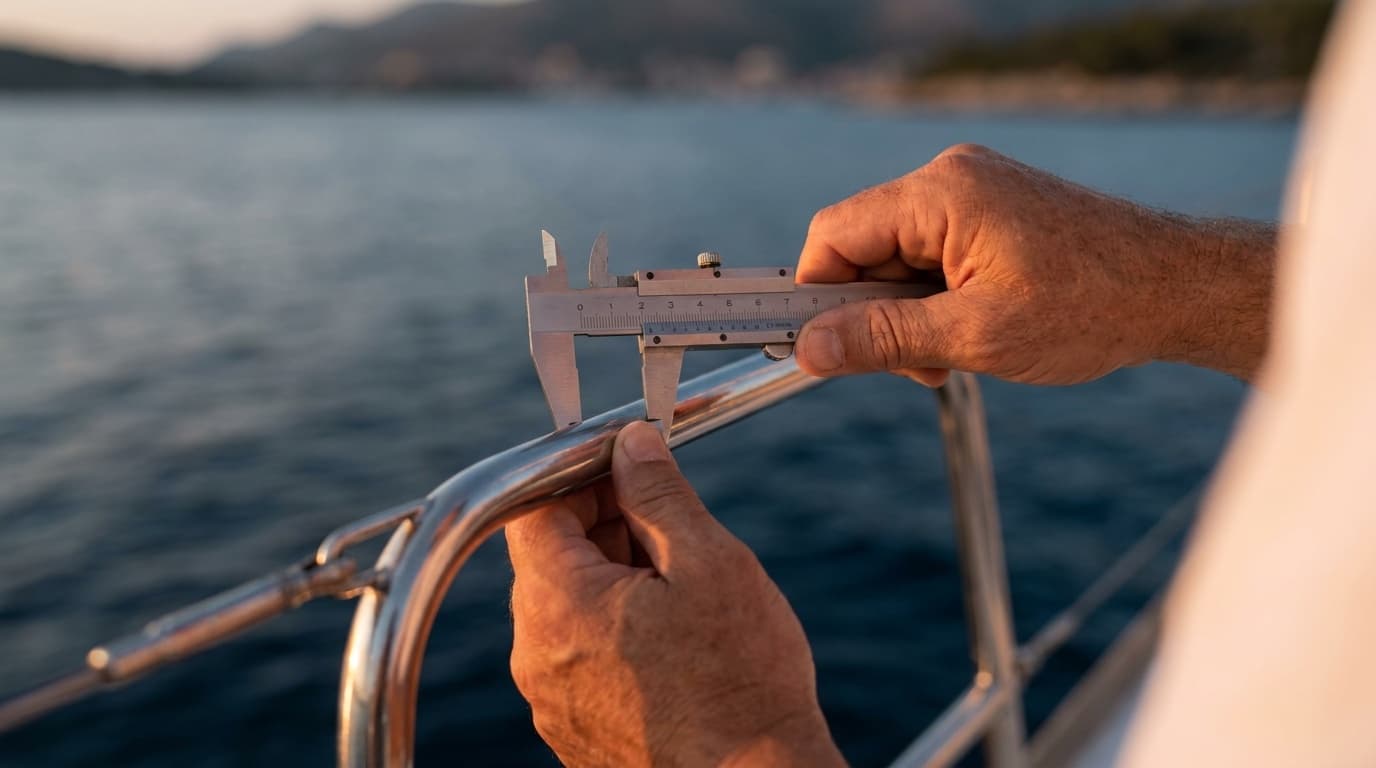
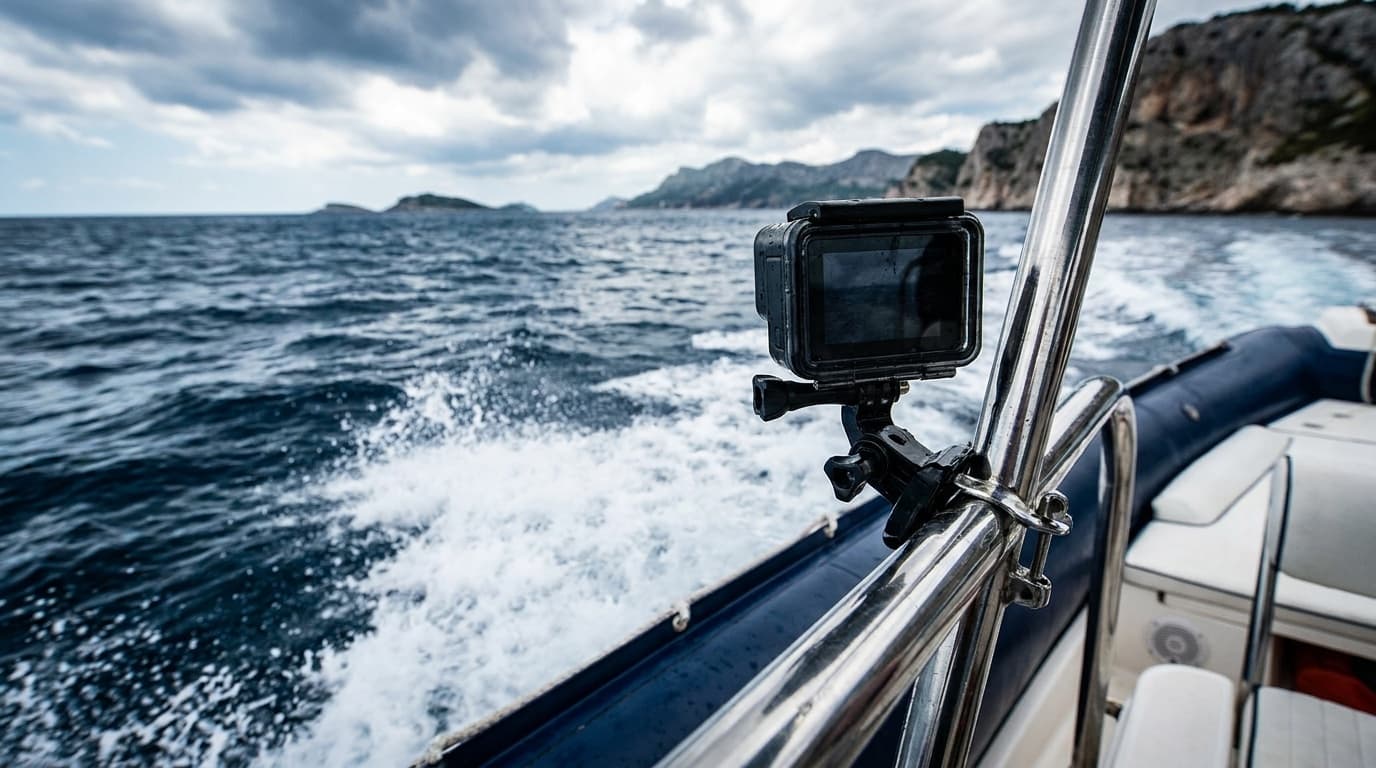
- Console rail forward of the helm, looking back at the driver and the wake. The classic "captain shot." 28-32 mm rail, RailClamp Camera Mount fits both diameters.
- Bow rail aft-facing, low-angle hero shot of the boat slamming through chop. Bow vibration kills audio but the visuals are dramatic. Battery-charge once per outing only.
Avoid the A-frame target tower if you have one. The vibration up there is brutal and the footage shakes even with HyperSmooth.
The mount itself
Three things matter on a marine action-cam mount:
- Quick-release on the camera side, not the rail side. If the camera takes a wave hit, the safety lanyard saves it, but only if the bracket comes off the camera, not the rail. Otherwise the lanyard rips the rail mount free and you lose both.
- A4 stainless on every bolt and washer. Galvanic corrosion between aluminium and salty zinc is a 6-month death sentence.
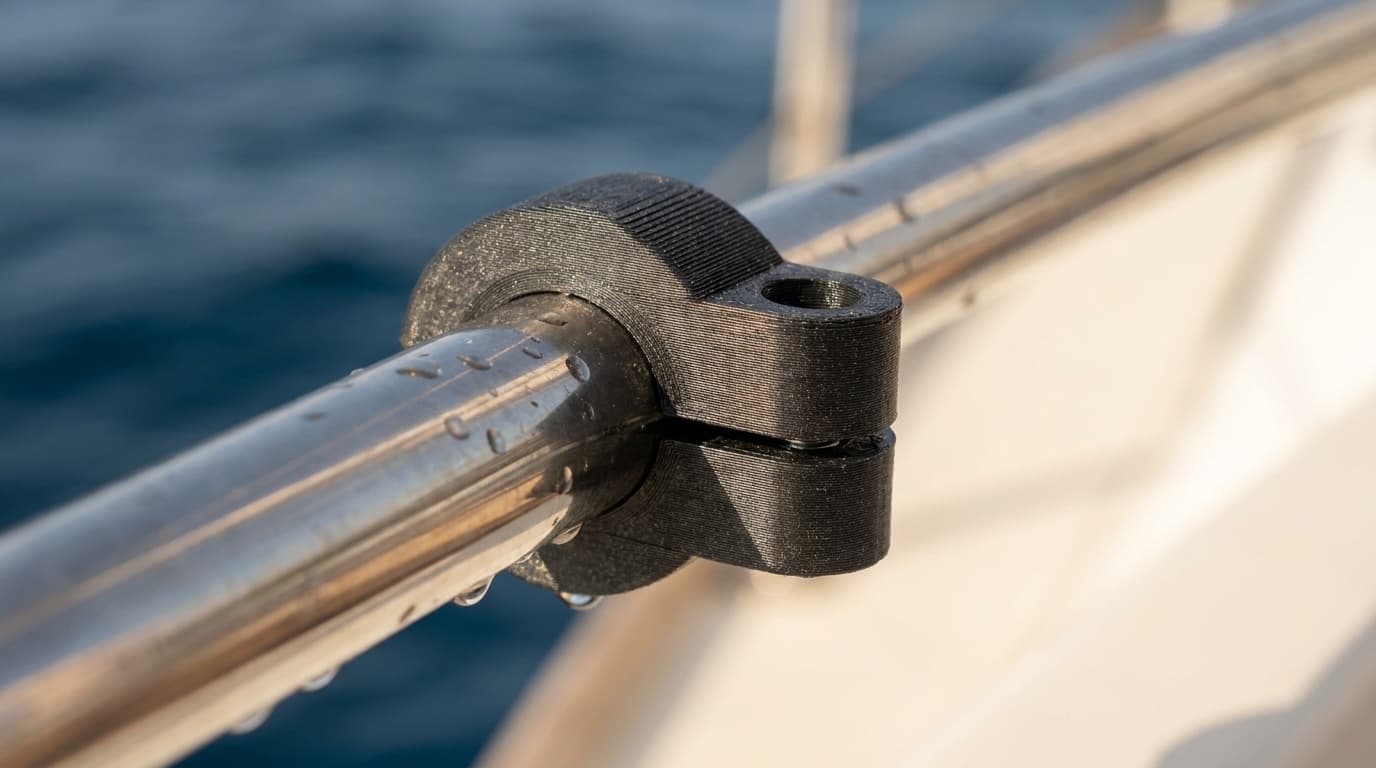
- A polymer cradle, not a metal one. Aluminium cradles wear the polished rail at the contact line. ASA with a TPU shock insert distributes load without surface marks.
Our Camera Mount nails all three. €34 with hardware, fits 22 to 32 mm rails.
The habit that loses 9 out of 10 cameras
Lanyard. The single difference between operators who lose cameras and operators who don't is whether they use the safety lanyard that came in the box.
A €5 stretchy floaty lanyard from any chandlery, looped through the camera's mount eye and clipped to a stainless ring on the boat, saves €450 of camera the first time the mount takes an unexpected hit.
We've watched cameras bounce off the foredeck, hit the water, and float home on a lanyard. We've watched cameras with no lanyard sink in 90 seconds. There is no in-between outcome.
Battery + condensation
A GoPro Hero shoots about 90 minutes at 4K 30fps. A typical day-trip is 4–6 hours. Plan for two batteries and one swap, plus a portable charger.
For condensation: keep the camera in an insulated case (the one it came in is fine) until you're going to use it. Going from a 22 °C cabin to a 12 °C morning at sea fogs the lens until the camera warms up, by which time you've missed the dolphin pod. A 30-minute warm-up on the foredeck before the boat moves solves it.
The single best storage habit is the silica gel packet that came in the box. Throw it in the case after every outing. It absorbs the moisture that would otherwise condense overnight.
Footage tips
- 4K 30fps unless you need slow-motion. 4K 60fps doubles the file size for marginally less motion blur. Most viewers can't tell.
- HyperSmooth Boost on, Horizon Lock off. The first stabilizes the boat, the second fights it.
- Linear lens for boat scenes, Wide for action only. Wide adds fisheye that exaggerates the boat's pitch, fine for action, distracting for cruise.
That covers it. Mount, lanyard, battery, lens: four habits, no lost cameras.