Drill once, regret three times
The first time you drill into a boat rail or deck, three things happen at once:
- You break the polished or anodized surface, a corrosion entry point that will brown-rust within one season.
- You void any unexpired manufacturer hull-fittings warranty (read your owner's manual: the phrase is usually "unauthorized aftermarket modifications").
- You take €500–€1,500 off the resale value, because the next buyer will see the holes and either negotiate down or skip the boat.
A small German charter operator we sell to keeps an internal spreadsheet of every drilled hole in their fleet. The cost-per-hole at resale: €78. They calculated it across 14 boats sold over four years. That number includes the buyer discount plus the broker's professional-survey deduction for each documented hole.
A clamp solves all three
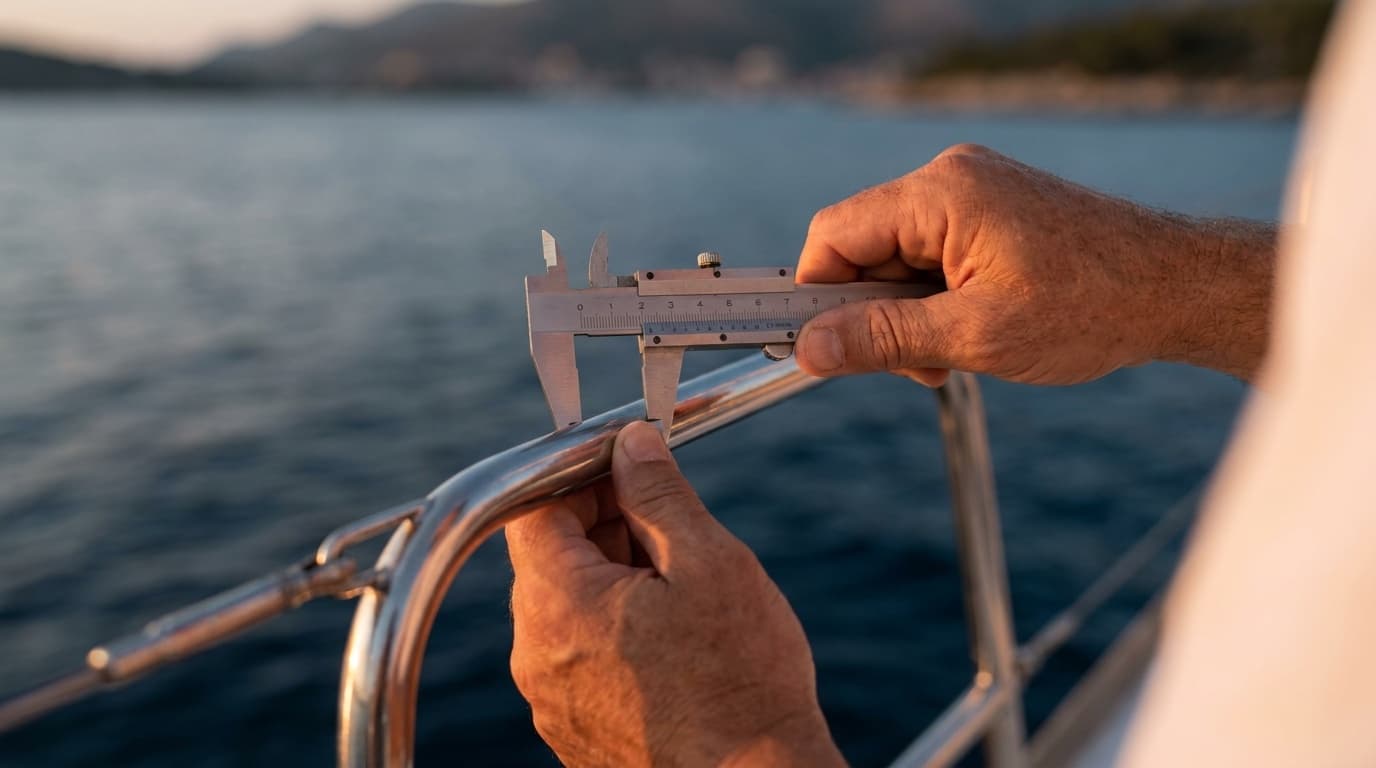
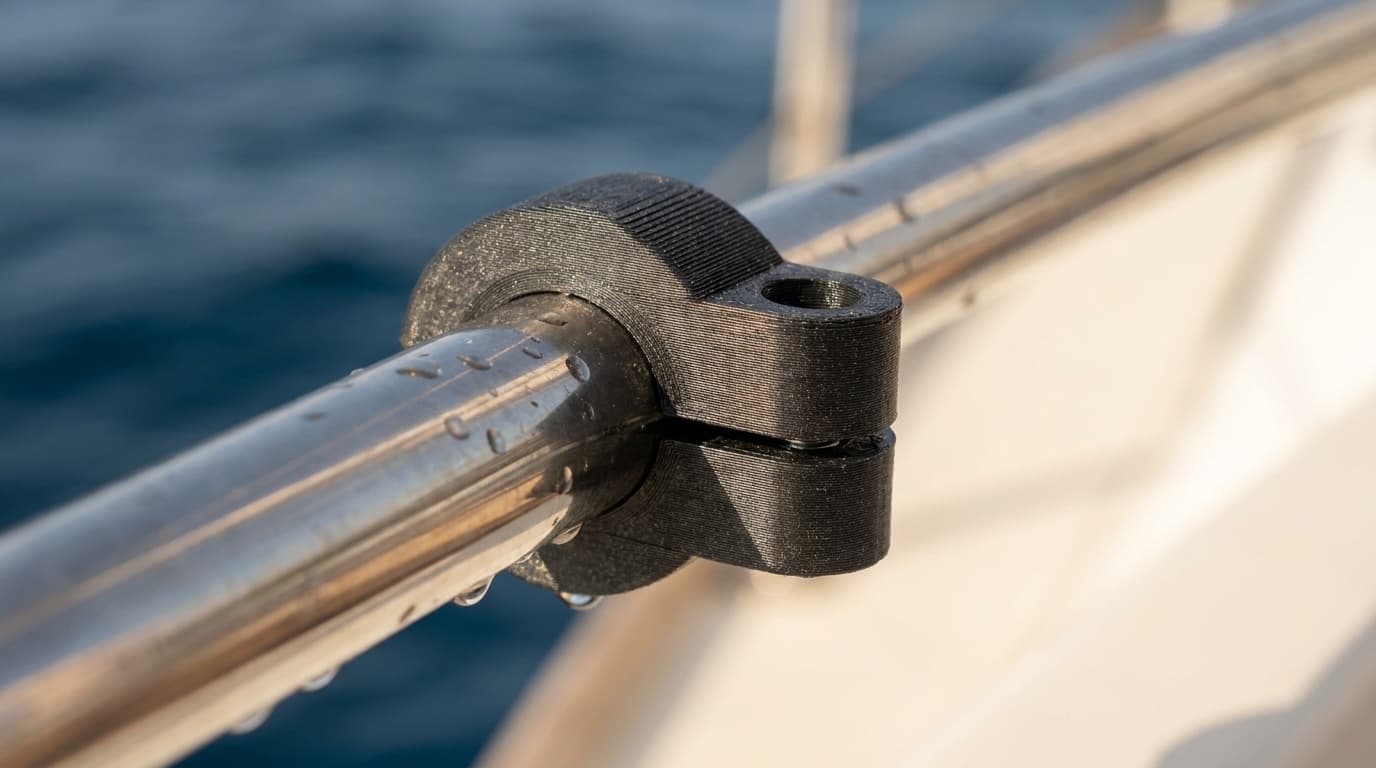
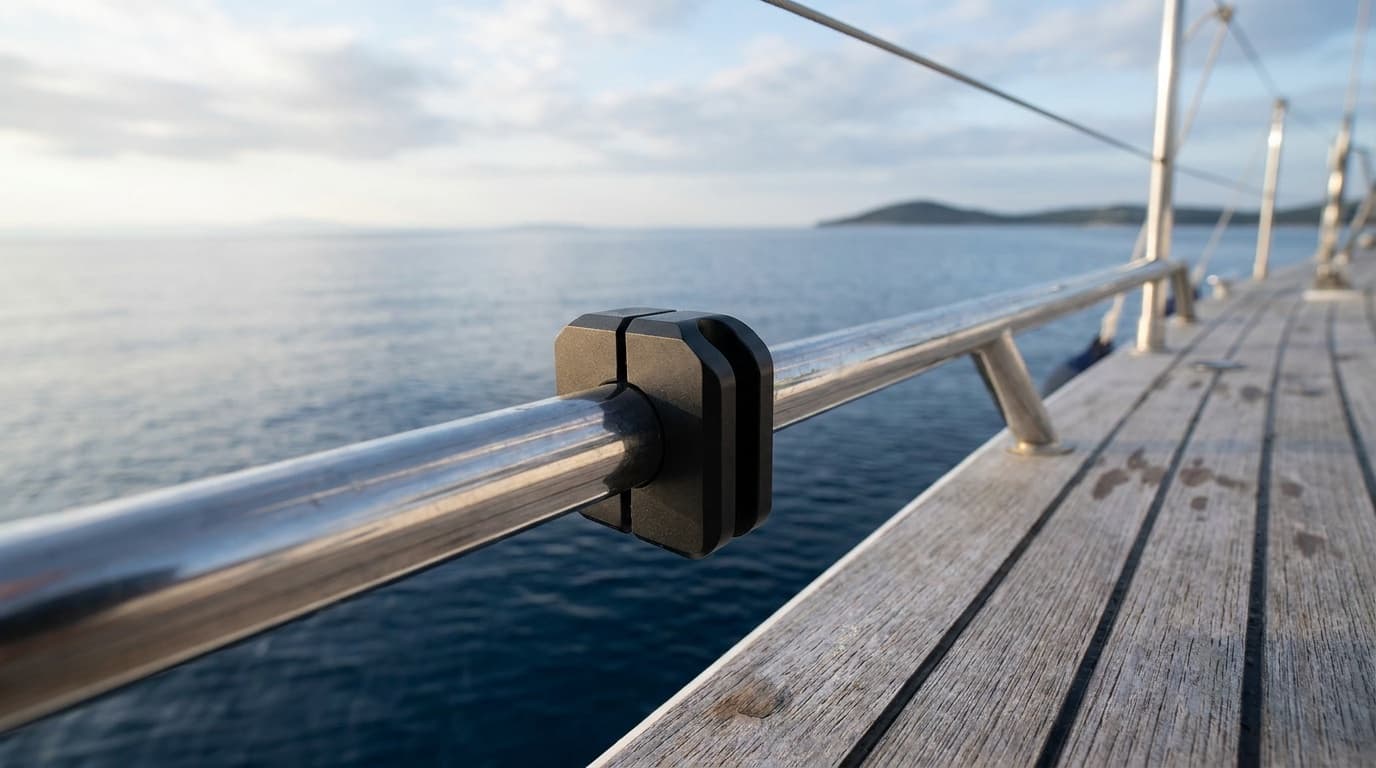
The original Peak Design pitch was Capture, a clip that grabs your camera strap without drilling into your bag. The same logic applies on a boat. A clamp around the existing stainless rail:
- Doesn't break the surface, doesn't introduce a corrosion entry.
- Doesn't modify any factory hardware, doesn't void anything.
- Removes in 60 seconds for survey, sale or storage.
You also get to re-position the mount through the season. A Garmin chart-plotter mount that's perfect at the helm at noon may glare at golden hour, slide it forward 200 mm and the problem goes away. Try doing that with a drilled bracket.
The marine-specific details we engineered around
A no-drill clamp on a yacht has to survive three things that a desk clamp never sees:
- Lateral wave-slap loads (20–40 N transient). Solved by the TPU shock insert that bites the rail without scratching.
- Galvanic potential between dissimilar metals. Solved by isolating the A4 hex hardware from the rail with ASA spacers; you'll never get a contact-corrosion stain on your polished stainless.
- The full UV + salt cycle described in our Materials journal entry. Solved by the polymer choice, not by surface coatings that wear off.
The end result is a part that fits a rail you already have, comes off in a minute, and weighs less than the bolts of an equivalent permanent bracket.
When we *would* recommend drilling
There's one case: when the part must take a load that exceeds the rail's clamp friction, a permanent VHF antenna mast or a navigation light. For everything else: cameras, phones, organizers, cable management, lights up to 200 g, a no-drill clamp wins on every dimension that matters.
And resale value. Always resale value.